
Demolition & Debris Removal Services
Demolition and Debris Removal services are vital aspects of construction and real estate, focusing on the teardown, alteration, and improvement of existing structures. These services cater to both private and commercial clients, aiming to either clear out old structures or revamp spaces to meet modern needs.
Demolition involves dismantling or destroying parts or the entirety of a structure. This process is often necessary when a building is too old, damaged, or not suited for renovation. Demolition services ensure the safe, efficient, and environmentally responsible removal of structures.

Key Activities in Demolition:
Site Assessment and Planning:- Initial Inspection: Before demolition begins, an assessment of the building or structure is conducted to check its condition and identify hazards (e.g., asbestos, mold, or structural instability).
- Structural Evaluation: Engineers and safety professionals evaluate the building to ensure safe demolition methods are chosen based on building material, design, and location.
- Permitting: Permits are required for most demolition projects to ensure that local regulations (including environmental safety, noise control, and waste management) are followed.
- Disconnecting Utilities: All utilities (water, electricity, gas, HVAC, etc.) are turned off and disconnected to prevent hazards during demolition.
- Hazardous Material Handling: If the building contains hazardous materials like asbestos, lead, or mold, licensed professionals must safely remove and dispose of them before proceeding with the demolition.
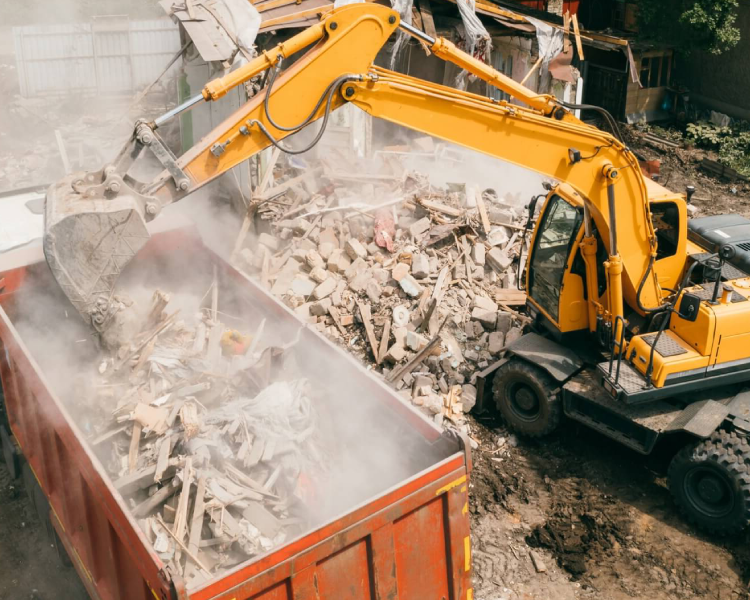
- Mechanical Demolition: This includes using large machinery such as bulldozers, cranes, or excavators to bring down or dismantle the structure.
- Selective Demolition: If only parts of the building need to be removed (e.g., floors, walls, roofs), selective demolition ensures that the rest of the structure remains intact.
- Manual Demolition: For smaller, less complex projects, manual demolition can be performed, such as the removal of walls, doors, windows, and interior elements.
- Implosion: In some cases, controlled explosions are used to bring down large buildings quickly and safely, typically in urban areas or when time is of the essence.
- Sorting and Recycling: Materials such as metal, wood, concrete, and glass are sorted for recycling where possible, to minimize landfill waste.
- Disposal: Non-recyclable materials are safely disposed of in accordance with local environmental guidelines.
- Debris Removal: After the demolition is completed, the site is cleared of debris, leaving a clean, safe space for the next phase of construction.
- Grading and Leveling: In some cases, the ground needs to be leveled or prepared to accommodate new construction.
- Foundation Removal: If necessary, foundations are removed to make room for new building projects, depending on the site’s future use.